The AI revolution has finally moved beyond your smartphone. In 2026, artificial intelligence is embedded in everyday gadgets that genuinely improve your life—from smart locks that unlock as you approach to robot vacuums with mechanical arms that tidy up for you. After extensive research across authoritative tech sources including TechRadar, Tom’s Guide, Consumer Reports, CNET, and expert reviews from CES 2026, we’ve compiled the best AI-powered gadgets that are actually worth your money.
These aren’t gimmicks or vaporware—these are real products you can buy today that use AI to make your daily routine easier, safer, and more efficient.
Top 10 AI-Powered Gadgets for Daily Life in 2026
1. Google Nest Doorbell (Wired, 3rd Gen) with Gemini AI
The Google Nest Doorbell with Gemini AI represents a significant leap forward in home security. Instead of generic “person detected” alerts, Gemini provides detailed AI descriptions like “delivery driver placed two packages on your porch at 12:13 PM” or “dog jumps out of playpen.” You can search your video history using natural language—just ask “What happened to the vase in the living room?” and Gemini finds relevant clips instantly.
Standout Features: The 2K HDR video quality is the highest resolution Nest has offered, with an expanded 166-degree field of view that captures your entire doorway from packages on the ground to tall visitors. The AI-powered Home Brief feature provides a daily summary of important events, saving you from scrolling through hours of footage.
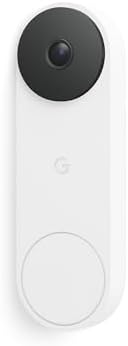
- Meet the wired Nest Doorbell; with 2K HDR video and Gemini, it knows what’s at your door and and what to do next (Gemini…
- No need to recharge or replace batteries; the Nest Doorbell keeps you plugged into home, day and night
- The Nest Doorbell keeps your data safe with encrypted video, two-step verification, and enhanced security through your G…
Pros:
- Natural language video search makes finding specific events effortless
- Detailed AI descriptions provide context at a glance (subscription required)
- 2K HDR video with night vision delivers crisp, clear footage
- Works with Google Home, Amazon Alexa, and Apple HomeKit
- Nearly instant response time (significantly faster than competitors)
Cons:
- Requires Google Home Premium subscription ($10-20/month) for full AI features
- Installation requires existing 16-24VAC doorbell wiring
- No local storage option—cloud storage only
2. Roborock Saros Z70 Robot Vacuum with OmniGrip Arm
The world’s first robot vacuum with a mechanical arm, the Saros Z70 is genuinely innovative. Its 5-axis OmniGrip arm can identify and move small objects weighing up to 300 grams—socks, tissues, lightweight shoes, and paper clumps. While the arm technology is still maturing (it successfully picks up objects about 50% of the time), the cleaning performance is exceptional with 22,000Pa suction and industry-leading mopping capabilities.
Standout Features: Beyond the robotic arm, the Z70 earned Vacuum Wars’ “Most Innovative Robot Vacuum” award for mid-2025. It features StarSight 3D navigation, FlexiArm edge cleaning that extends to reach corners, and a 10-in-1 multifunctional dock with hot water mop washing and automatic detergent dispensing.

- Revolutionary OmniGrip Mechanical Arm – A Robotic Cleaner & Helper: Experience the robotic vacuum with a five-axis mecha…
- Ultimate Cleaning Coverage – Intelligent Multi-Pass Cleaning: Forget pre-cleaning! The Saros Z70 detects, marks, and lif…
- 22,000Pa* Suction & Hot Water Mopping – Powerful & Deep Cleaning: With 22,000Pa* suction power, the Saros Z70 effectivel…
Pros:
- Revolutionary mechanical arm shows the future of robot vacuums
- Exceptional mopping performance (scored 139 in dried-stain tests)
- 22,000Pa suction with anti-tangle dual rubber brush system
- Remote control via app allows manual object pickup
- Customizable AI obstacle training for up to 50 new objects
Cons:
- Arm feature works inconsistently (50% success rate currently)
- Very expensive at $1,999 (though down from $2,599)
- Limited to recognizing slides, fabric clumps, and paper balls autonomously
- Smaller dustbin due to space taken by mechanical arm
3. RingConn Gen 2 Air – AI Health & Wellness Smart Ring
The RingConn Gen 2 Air is an ultra-thin, AI-powered smart ring designed to monitor your health and wellness around the clock without the bulk of a smartwatch. Weighing just a few grams with an ergonomic profile, the Gen 2 Air delivers continuous tracking of key biometric data — including heart rate, blood oxygen levels, stress, sleep stages, and activity — right from your finger. It pairs with your smartphone via Bluetooth and syncs seamlessly with the RingConn app to provide intuitive visualizations and daily insights. Unlike many health wearables, this smart ring doesn’t require a subscription for core features, making it a cost-effective choice for everyday health tracking.
Standout Features: The RingConn Gen 2 Air stands out with its ultra-lightweight, slim design that makes all-day and overnight wear effortless, while delivering 24/7 AI-powered health tracking for heart rate, stress, sleep stages, blood oxygen, and body temperature trends. Its long battery life of up to 10 days eliminates daily charging hassles, and the IP68 waterproof build ensures reliable use during workouts, showers, or swimming. What truly sets it apart in 2026 is its subscription-free wellness insights, making advanced AI health monitoring accessible without ongoing costs.

- [AI-Powered Health Insights] RingConn Gen 2 Air Smart Ring integrates AI with multi-sensor data to continuously track ke…
- [Size Before You Buy] RingConn Gen 2 Air uses unique sizing standards, different from standard ring sizes. Purchase Ring…
- [No-Feel Wearing] Experience a comfortable, stylish design with a super-thin 2mm profile and only 2.5g weight. Won’t int…
Pros:
- Comprehensive AI Health Monitoring
- Long Battery Life
- Lightweight & Comfortable for Daily Wear
- Subscription-Free Core Features
- Waterproof & Durable
Cons:
- Limited Fitness Tracking
- Doesn’t Track Sleep Apnea
- Sizing & Fit Can Be Tricky
- App & Ecosystem Limitations
4. Ray-Ban Meta Smart Glasses (Gen 2)
Ray-Ban Meta Smart Glasses blend AI functionality into iconic eyewear. The second-generation model features a 12MP ultra-wide camera, 3K video recording, improved audio through open-ear speakers, and Meta AI integration. You can livestream to Instagram or Facebook, make video calls where others see through your eyes, and ask Meta AI questions hands-free.
Standout Features: The latest update enables multimodal AI—the glasses can “see” what you’re looking at and answer questions about it. Need to identify a plant? Want to translate text? Just ask. The camera quality rivals smartphone cameras with 3x digital zoom and improved low-light performance.

- #1 SELLING AI GLASSES – Tap into iconic style for men and women, and advanced technology with the newest generation of R…
- UP TO 8 HOURS OF BATTERY LIFE – On a full charge, these smart AI glasses can last 2x longer than previous generations, u…
- 3K ULTRA HD: RECORD SHARP VIDEOS WITH RICH DETAIL – Capture photos and videos hands-free with an ultra-wide 12 MP camera…
Pros:
- Looks like normal Ray-Ban sunglasses (multiple style options)
- 12MP camera with 3K video and livestreaming capabilities
- Hands-free Meta AI access with visual understanding
- Two-way video calling on WhatsApp, Messenger, Instagram
- All-day battery life with charging case
Cons:
- Privacy concerns—small LED may not be obvious to others when recording
- Limited to Meta’s ecosystem for AI features
- No augmented reality display (that’s the $799 Display model)
- Voice commands require saying “Hey Meta”
5. Aqara Smart Lock U400 with UWB
The Aqara U400 is one of the first consumer smart locks using Ultra-Wideband (UWB) technology for truly hands-free unlocking. As you approach your door with your iPhone or Apple Watch in your pocket, the lock detects your precise location and trajectory, unlocking only when you’re intentionally arriving from outside. This eliminates false unlocks when you’re inside or passing by.
Standout Features: UWB provides centimeter-level accuracy using Time of Flight and Angle of Arrival calculations. You can customize the lock to only unlock when approached from specific angles (left, right, or center). It’s Aliro-ready, meaning Android support through Samsung Wallet is coming in Q1 2026.
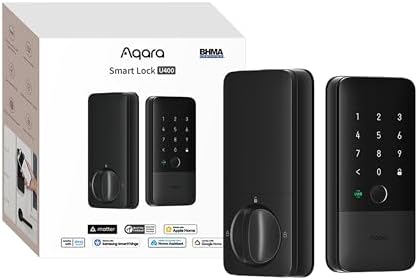
- True Hands-Free Unlocking with UWB Technology: Experience a new era of smart access — UWB (Ultra-Wideband) detects your …
- All-in-One Unlocking Options: Enjoy Apple home key tap-to-unlock (requires an Apple Thread-enabled Matter controller: Ho…
- Matter Over Thread for Multi-Ecosystem Compatibility: Built with Matter over Thread, the U400 can connect to multiple sm…
Pros:
- True hands-free entry using UWB technology
- Works with Apple Home, Google Home, Alexa, SmartThings via Matter
- Multiple unlock options: UWB, NFC, fingerprint, keypad, physical key
- Rechargeable battery (6 months per charge) with USB-C emergency charging
- Built-in gyroscope enables auto-lock when door closes
Cons:
- Currently requires iPhone 11+ or Apple Watch Series 6+ for UWB features
- Android UWB support delayed until Q1 2026
- Requires Thread Border Router and Matter hub for full functionality
- Battery life (6 months) shorter than some competitors
6. Plaud NotePin AI Transcription Wearable
Designed for professionals who need accurate meeting notes, the Plaud NotePin is a magnetic wearable that records conversations and automatically generates transcriptions, summaries, and action items. It’s HIPAA-compliant, making it suitable for healthcare professionals, and offers superior transcription accuracy compared to competitors.
Standout Features: The NotePin includes 300 minutes of AI transcription free monthly, with a Pro plan ($8.33/month) expanding to 1,200 minutes. It uses advanced AI processing to reduce background noise and improve speech clarity beyond standard digital voice recorders.

- Plaud Intelligence: Capture conversations in 112 languages and generate accurate transcripts with the Plaud App and Web….
- Enterprise-grade Privacy: Built to the highest standards with ISO 27001/27701, SOC 2, HIPAA, GDPR, and EN18031 complianc…
- Wearable Design for Hands-free Capture: Wear your device effortlessly with the 0.59 oz thumb-sized design. Plaud NotePin…
Pros:
- HIPAA-compliant for medical and legal professionals
- Magnetic design clips to clothing or wears as pendant
- 300 free monthly transcription minutes included
- Speaker identification and searchable transcripts
- AI-generated summaries and action items
Cons:
- Pro plan required for heavy users ($8.33/month for 1,200 minutes)
- Smaller feature set compared to Limitless (now owned by Meta)
- Requires connection to phone via Bluetooth
- Recording laws vary by state—user must ensure compliance
7. Google Nest Cam Indoor (Wired, 3rd Gen)
Google’s indoor security camera brings the same Gemini AI intelligence as the doorbell to interior spaces. The 2K resolution camera with 152-degree field of view can pan digitally to follow motion, and Gemini provides detailed event descriptions instead of generic alerts.
Standout Features: The real power is in the AI search functionality. Ask “When did the kids get home yesterday?” or “Did the dog get into the trash?” and Gemini surfaces the exact clips. The Home Brief feature provides a daily recap of important household events.
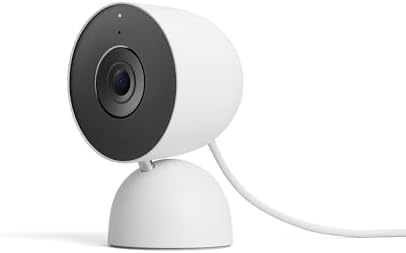
- Meet the smarter, sharper wired Google Nest Cam Indoor; with 2K HDR video and Gemini, it knows what to look out for and …
- With an Advanced subscription to Google Home Premium, know more about what’s happening with notifications like “Kids are…
- Google Nest Cam Indoor keeps your data safe with encrypted video, two-step verification, and enhanced security through y…
Pros:
- Affordable at $99.99 with premium AI features
- 2K HDR video with 152-degree wide field of view
- Gemini AI descriptions and natural language search
- Works with Google Home, basic Alexa support
- Night vision and two-way audio
Cons:
- Wired only—no battery option
- Requires Google Home Premium for full AI features ($10-20/month)
- Limited platform support outside Google ecosystem
- Cloud storage only—no local storage option
8. Amazon Echo Show 8 (3rd Gen) with Alexa+
The Echo Show 8 (3rd Gen) represents Amazon’s leap into generative AI-powered smart home hubs. Featuring the new Alexa+ AI assistant, this 8-inch smart display adapts to your habits, provides personalized content, and learns your preferences over time. The built-in 13-megapixel camera recognizes when you approach and automatically displays relevant information—weather, calendar events, reminders, or news tailored to your interests.
Standout Features: Alexa+ is a significant upgrade over traditional Alexa, using generative AI to provide contextual follow-ups based on recent conversations and personalized notifications. The device features Omnisense technology that automatically adjusts audio based on room acoustics, with front-facing stereo speakers and a custom woofer delivering room-filling sound. It serves as a central hub for Matter, Zigbee, and Thread devices, unifying your entire smart home ecosystem.
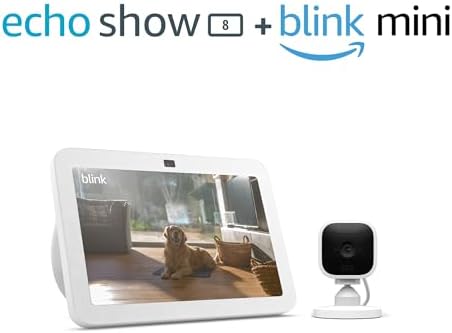
- This bundle contains Echo Show 8 (3rd Gen) and Blink Mini.
- BETTER INSIDE AND OUT – Entertainment is more immersive with spatial audio and an 8″ HD touchscreen. Video calling is cr…
- VIBRANT SIGHTS, FULL SOUND – Content on Prime Video, Netflix, Fire TV Channels, and more comes to life with an HD displa…
Pros:
- Generative AI-powered Alexa+ provides personalized, context-aware assistance
- 13MP camera with automatic face recognition for personalized displays
- Omnisense adaptive audio adjusts to room acoustics automatically
- Works as Matter controller and Zigbee/Thread hub for smart home devices
- Significantly improved sound quality with stereo speakers and custom woofer
- No subscription required for core Alexa+ features
Cons:
- Privacy concerns with always-on camera and microphone (can be physically covered)
- Limited to Amazon’s ecosystem for full AI features
- Screen size (8 inches) smaller than the Echo Show 15
- Some advanced Alexa+ features may require future subscription tiers
9. Eufy Video Doorbell S4 with OmniTrack AI
The Eufy S4 features OmniTrack AI that doesn’t just detect motion—it actively tracks visitors, automatically adjusting zoom to keep them centered. With a 180-degree vertical and horizontal field of view and 3K resolution, it captures your entire doorway from ground-level packages to tall visitors in a single frame.
Standout Features: The camera provides crystal-clear footage up to 26 feet away, and the AI tracking ensures you never lose sight of whoever’s at your door, even if they move around. Works with major smart home platforms without requiring a subscription for basic features.
Pros:
- OmniTrack AI automatically follows and zooms on visitors
- 180-degree field of view captures entire doorway
- 3K resolution for exceptional clarity
- No subscription required for basic features
- Works with HomeKit, Google Home, Alexa
Cons:
- Higher price point at $279.99
- Not yet available (Q1 2026 launch)
- Advanced features may require Eufy subscription
- Limited third-party integrations compared to Google/Ring
This product will launches soon.
Buy Similar Products


10. Rokid AI Glasses Style
The Rokid AI Glasses Style represents a new approach to smart glasses—ditching the display entirely to focus on voice-first AI interaction, comfort, and all-day wearability. At just 38.5 grams, these are among the lightest full-featured AI glasses available, designed to blend in like normal eyewear rather than announcing themselves as tech. Launched at CES 2026 and now available globally, Rokid has built an open AI ecosystem that supports multiple AI models including ChatGPT 5.2, DeepSeek, and Qwen.
Standout Features: Unlike Meta Ray-Bans that lock you into Meta’s ecosystem, Rokid supports an open AI platform allowing access to various AI services. The dual-chip architecture (NXP RT600 for low-power tasks and Qualcomm AR1 for AI/imaging) enables up to 12 hours of daily use with 24-hour standby. The 12MP Sony IMX681 camera with Electronic Image Stabilization captures 3K video in vertical format (9:16) perfect for social media without awkward cropping. Voice and gesture controls let you nod to answer calls, shake to hang up, or simply say “Hey Rokid” to activate AI assistance.
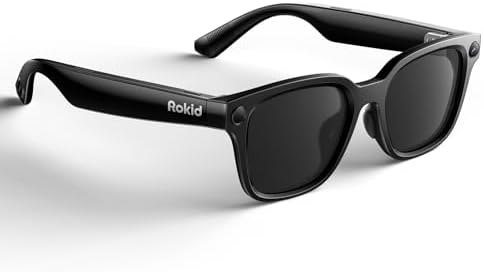
- Real-Time Global Translator: Break language barriers instantly with real-time translation directly in your field of view…
- 12MP First-Person Camera with EIS: Featuring a Sony IMX681 sensor with Electronic Image Stabilization (EIS) to capture c…
- Integrated ChatGPT 5.2 AI Assistant: Your hands-free knowledge partner for object recognition, real-time information ret…
Pros:
- Ultra-lightweight 38.5g design for comfortable all-day wear
- Open AI ecosystem supports multiple models (ChatGPT, DeepSeek, Qwen)
- Comprehensive prescription support (plano to ±15.00D) with photochromic, polarized, and blue-light filtering options
- 12MP camera with EIS for stable 3K video in social-ready vertical format
- Real-time translation in 89 languages with voice interaction in 12 languages
- Up to 12 hours battery life with normal use
- IPX4 water resistance and UV400 protection
Cons:
- No augmented reality display (voice-only interface)
- Requires smartphone companion app for full functionality
- Translucent Gray color option delayed until March 2026
- Camera records maximum 10 minutes continuous video per session
Things to Consider Before Buying AI-Powered Gadgets
1. Privacy and Data Security
AI gadgets often collect sensitive personal data to function. Before purchasing, understand where your data goes, how it’s processed, and who has access to it. Wearables like Plaud NotePin record conversations constantly—check local recording consent laws. The Pebble Index 01 takes a privacy-first approach with local on-device processing and no cloud dependency. For smart home devices, verify whether data is stored locally or in the cloud, and whether encryption is used. HIPAA compliance matters if you’re a healthcare professional. Always review privacy policies and opt for devices that give you control over your data, including the ability to delete it. The Echo Show 8’s camera can be physically covered when not in use, addressing privacy concerns while maintaining functionality.
2. Subscription Costs Add Up
Many AI features require ongoing subscriptions. The Google Nest Doorbell’s Gemini AI costs $10-20/month. Plaud NotePin needs $8.33/month for 1,200 minutes. Before buying, calculate total cost over 2-3 years—a $99 device with $20/month subscription costs $579 over two years. Some devices offer free tiers (Plaud) or no subscriptions at all—the Pebble Index 01 costs just $75 with zero ongoing fees, and the Echo Show 8 provides core Alexa+ features without subscription. Others like Aqara’s smart lock and Ray-Ban Meta glasses provide core functionality without subscriptions, with optional premium features. Consider whether subscription features are essential or nice-to-have, and whether you’re likely to maintain the subscription long-term.
3. Ecosystem Compatibility
AI gadgets work best within their native ecosystems. The Google Nest Doorbell shines in Google Home but offers limited functionality with Alexa. Ray-Ban Meta glasses require Meta accounts and work primarily with Facebook/Instagram. However, Matter and Thread standards are changing this. The Aqara U400 lock works across Apple Home, Google Home, Alexa, and SmartThings thanks to Matter certification. When choosing devices, inventory your existing smart home ecosystem and verify compatibility. If you’re heavily invested in Apple HomeKit, prioritize Matter-certified devices or those with native HomeKit support. For maximum flexibility, look for devices supporting multiple platforms or open standards.
4. Real-World Utility vs. Novelty
The Roborock Saros Z70’s mechanical arm sounds amazing—but it only successfully picks up objects 50% of the time and recognizes limited item types. That’s a lot of money for a feature that’s still maturing. Evaluate whether AI features solve real problems you face daily, or whether they’re impressive tech demos. The Google Nest Doorbell’s natural language search genuinely saves time if you frequently review security footage. Aqara’s UWB smart lock solves the real problem of fumbling for keys with full hands. The Pebble Index 01 is perfect if you frequently forget fleeting thoughts and need instant voice capture. The Echo Show 8’s Alexa+ learns your habits to provide genuinely useful contextual information. But some AI features are solutions looking for problems. Ask yourself: Will I actually use this AI feature weekly? Does it save meaningful time or effort? Or is it just cool to show friends? Buy based on practical value, not novelty.
5. Battery Life and Maintenance
AI processing drains batteries faster than traditional devices. The Aqara U400 lock lasts 6 months per charge—better than daily charging but requiring planning. The Pebble Index 01 takes a unique approach with a non-rechargeable battery lasting approximately 2 years, eliminating charging anxiety entirely (though requiring ring replacement when depleted). The Echo Show 8 requires wall power, so placement near outlets is essential. Robot vacuums with AI features and mechanical arms sacrifice dustbin space and battery capacity for the technology. Consider your tolerance for device maintenance. Can you remember to charge weekly? Monthly? Do you have backup options when batteries die? For critical devices like smart locks, verify emergency power options—the U400 offers USB-C emergency charging from a power bank. For wearables, evaluate whether battery life fits your usage patterns. Professional recording all day requires more capacity than occasional voice notes.
Frequently Asked Questions
Q1: Are AI-powered gadgets worth the premium price in 2026?
It depends on the specific device and your needs. AI features that solve genuine problems—like the Google Nest Doorbell’s natural language video search or the Aqara U400’s hands-free unlocking—can justify premium prices through time savings and convenience. However, some AI features are gimmicks. The Roborock Z70’s mechanical arm costs $1,000 more than comparable robot vacuums but works inconsistently. Evaluate whether the AI feature addresses a real pain point you experience regularly. Calculate total ownership cost including subscriptions over 2-3 years. For example, a $179 Nest Doorbell with $20/month subscription costs $659 over two years—reasonable for comprehensive home security with AI search. A $1,999 robot vacuum with 50% reliable arm technology may not justify the premium for most users.
Q2: How do AI wearables handle privacy when recording conversations?
AI wearables use various approaches to balance functionality with privacy. The Pebble Index 01 takes a privacy-first approach—it only records when you press and hold the physical button, processes all audio locally on your phone using open-source software, and never sends data to the cloud unless you opt in for backups. Professional tools like Plaud NotePin feature visible LED indicators when recording, though effectiveness varies in bright light or at distance. Some devices discard audio after transcription, storing only text summaries to protect privacy. The biggest privacy concern is legal—many states require all-party consent for recording. California, for instance, is a two-party consent state where you must inform everyone you’re recording. Best practice: Always inform people you’re recording, review your state’s recording laws, and understand where your data i stored and who can access it. For maximum privacy, choose devices with local-only processing like the Pebble Index 01, which keeps all your data on your phone with no cloud dependency.
Q3: Can AI gadgets work offline, or do they require constant internet connection?
Most AI gadgets require internet connectivity for their advanced features, but capabilities vary. The Google Nest Doorbell needs internet for Gemini AI analysis and cloud storage but can still detect motion and record locally for short periods during outages. The Roborock Saros Z70 can vacuum and mop without internet, but AI features like custom object recognition and firmware updates require connectivity. The Aqara U400 lock works via Bluetooth without internet for basic unlocking but needs internet for remote access, automation, and Matter features. The Pebble Index 01 works completely offline—it records audio to internal storage and processes everything locally on your phone without any internet required. The Echo Show 8 requires constant internet for Alexa+ features and cannot function as a smart assistant without connectivity. For critical devices like smart locks, verify offline functionality. The U400 includes physical keys and keypad access independent of internet. Generally, expect degraded or limited functionality without internet for most AI gadgets, but core safety and access features should work offline.
Q4: Are there health or safety concerns with constantly wearing AI devices?
AI wearables like the Pebble Index 01 and Plaud NotePin, and smart glasses like Ray-Ban Meta and Rokid AI Glasses are generally safe to wear constantly, but some considerations exist. These devices emit low-power Bluetooth radio waves, which extensive research has found to be safe at typical exposure levels—far lower than cell phones. The Pebble Index 01’s unique battery approach (non-rechargeable, lasting 2 years) means no charging circuits and even lower RF emissions. However, some individuals prefer to minimize all RF exposure. The bigger concern is psychological and social. Recording conversations or wearing camera-equipped glasses can create social tension and trust issues with friends, family, and colleagues who may feel surveilled. This can impact relationships and mental well-being. There’s also risk of becoming overly dependent on AI memory assistance, potentially atrophying natural memory skills. Some users report anxiety about forgetting to charge devices or missing important moments when the device isn’t active. From a physical safety perspective, ensure devices don’t pose choking hazards if worn as pendants or rings, and that magnetic clasps don’t interfere with pacemakers or other medical devices. For smart locks, maintain backup access methods (physical keys, codes) in case of device failure. Overall, AI wearables pose minimal direct health risks but require thoughtful use to avoid negative social and psychological impacts.
Conclusion:
The AI gadget revolution of 2026 delivers genuinely useful products that enhance daily life in meaningful ways. The future of AI in everyday gadgets looks promising. As Machine learning models improve and hardware becomes more sophisticated, we’ll see better accuracy, lower latency, and more genuine utility. But for now, focus on devices with clear, practical benefits that fit your budget and privacy comfort level.
The AI gadgets that succeed aren’t trying to replace everything—they’re augmenting specific parts of life where automation and intelligence create real value. That’s the sweet spot, and 2026 offers more genuinely useful AI gadgets than ever before. Happy Shopping!