Christmas Eve is the perfect time to gather around the table for board game night games that bring generations together. Whether you’re looking for great family board games like the classic Monopoly board with its iconic Monopoly man, strategic options like Codenames, or quick classics like the Connect Four game, finding the right holiday board games can transform your celebration into an unforgettable evening. From trivia board games that test everyone’s knowledge to cooperative adventures that unite players against common challenges, the best family board games create memories that last far beyond the holiday season.
The modern board game renaissance has revolutionized family entertainment, moving far beyond traditional options into engaging experiences that appeal to all ages and interests. Today’s family board games balance accessibility with strategic depth, offering everything from quick party games perfect for large gatherings to immersive adventures for intimate groups. Whether you’re introducing grandparents to contemporary gaming or entertaining tech-savvy teens, these expertly curated holiday board games deliver the perfect mix of competition, cooperation, and Christmas cheer for your board game night.
1. Ticket to Ride (2025 Edition)
The modern classic that introduced a generation to strategy gaming, Ticket to Ride remains the gold standard for family board games. Players collect train cards to claim railway routes connecting cities across North America, racing to complete destination tickets before opponents block their path.
What Makes It Stand Out: This beautifully illustrated game strikes the perfect balance between accessible gameplay and strategic depth. The 2025 edition features updated components and faster setup than previous versions. Within 15 minutes, even first-time players grasp the mechanics, yet the tactical possibilities keep veterans engaged for years. The tension builds naturally as routes fill up and players scramble to complete their connections before running out of trains.
Pros:
- Quick to learn with intuitive gameplay that anyone age 8+ can master
- Highly replayable with multiple expansion maps available (Europe, Nordic Countries, etc.)
- Excellent production quality with sturdy cards and satisfying train pieces
- Perfectly scaled for 2-5 players with minimal downtime between turns
Cons:
- Strategy depth is somewhat limited compared to heavier games
- Route blocking can frustrate younger or less competitive players
- Games can feel samey after extensive play without expansions

- EXCITING TRAIN ADVENTURE: Embark on a journey across early 20th century North America, collecting train cards and claimi…
- EASY TO LEARN, HARD TO MASTER: With simple rules and engaging gameplay, Ticket to Ride is perfect for both new and exper…
- BEAUTIFUL GAME COMPONENTS: Features a giant map of the North American train network, accompanied by miniature trains for…
2. Codenames
The party game phenomenon that swept Gen Con and became an instant classic, Codenames transforms simple word association into an edge-of-your-seat espionage thriller. Two teams compete to identify their field agents using one-word clues from their spymaster, avoiding the dreaded assassin card.
What Makes It Stand Out: Codenames excels at bringing people together through creative thinking and communication. The “spymaster” role creates memorable moments as players attempt cryptic connections between seemingly unrelated words. It accommodates large groups (up to 8+ players) and scales beautifully from intimate gatherings to full party mode. Each game generates entirely different word combinations, ensuring no two matches feel alike.
Pros:
- Infinitely replayable with 200 double-sided word cards
- Accommodates 2-8+ players with team-based gameplay
- Quick 15-minute games perfect for multiple rounds
- Encourages creative thinking and reveals how teammates’ minds work
Cons:
- Requires at least 4 players for optimal experience
- Can be mentally taxing for spymasters who must plan multi-word connections
- Players unfamiliar with each other may struggle with abstract clue interpretation
- Difficulty spikes dramatically with competitive groups
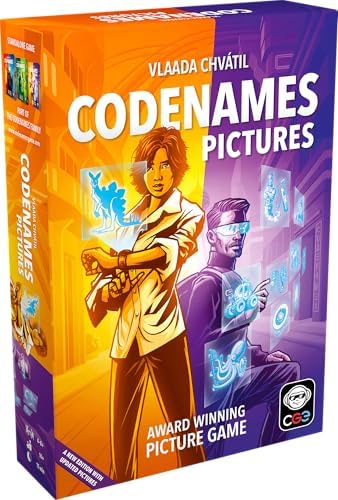
- Visual Twist: Experience Codenames with Images
- Spymasters’ Clues: Link Abstract Pictures
- Operatives’ Mission: Find Agents, Avoid Threats
3. Catan (6th Edition)
The game that launched the modern board gaming revolution, Catan challenges 3-4 players to settle an uninhabited island by gathering resources, building infrastructure, and trading with rivals. Brick, lumber, wheat, ore, and sheep become the currencies of expansion as players race to 10 victory points.
What Makes It Stand Out: Catan’s genius lies in its modular hexagonal board that creates a unique island every game. The dice-driven resource system keeps all players engaged even during opponents’ turns, while the trading mechanic creates dynamic negotiations and temporary alliances. It’s the perfect gateway from traditional games like Monopoly to strategic modern board games, offering just enough complexity to feel rewarding without overwhelming newcomers.
Pros:
- Modular board ensures high replayability with thousands of possible configurations
- Trading mechanics create constant player interaction and negotiation
- Accessible yet deep strategy appeals to ages 10+
- Extensive expansion ecosystem for players who want more
Cons:
- Heavily dependent on dice rolls, which can frustrate strategic players
- Games can drag with analysis-paralysis prone players
- Player in last place can feel stuck with limited comeback mechanisms
- Requires exactly 3-4 players (5-6 player expansion sold separately)

- EXPLORE THE ISLAND OF CATAN: Settle the uninhabited island of Catan by gathering resources, building infrastructure, and…
- STRATEGY AND COMPETITION: Compete with 2-3 opponents to expand your settlements and cities while managing resources and …
- TRADE, BUILD, AND SETTLE: Use brick, wood, wheat, ore, and sheep to construct roads, settlements, and cities in your rac…
4. Pandemic
In this cooperative masterpiece, 2-4 players become disease-fighting specialists racing to find cures for four deadly plagues threatening humanity. Only through teamwork, communication, and strategic planning can the team prevent global catastrophe.
What Makes It Stand Out: Pandemic invented a new paradigm where players win or lose together, eliminating the competitive tension that can divide families. Each specialist role (Medic, Scientist, Operations Expert, etc.) has unique abilities that create satisfying team synergies. The escalating threat level generates authentic tension without player-vs-player conflict, making it ideal for mixed age groups and competitive households.
Pros:
- Cooperative gameplay perfect for families who prefer teamwork over competition
- High replay value with varied difficulty levels and scenarios
- Encourages communication and strategic planning skills
- Role-based gameplay gives each player a unique contribution
Cons:
- Can suffer from “quarterbacking” where one player dominates decisions
- Difficulty spikes dramatically; normal mode can brutalize newcomers
- Games can feel similar after multiple plays without expansions
- 45-minute playtime may be too long for restless children

- cardboard
- Imported
- STRATEGY GAME: Players must work together playing to their characters’ strengths as they plan their strategy of eradicat…
5. Azul
This award-winning tile-placement game challenges 2-4 players to create stunning mosaic patterns inspired by Portuguese azulejos. Each round, players draft colorful tiles from factory displays, carefully planning placements to maximize points while avoiding penalties for unused tiles.
What Makes It Stand Out: Azul is deceptively simple to learn but endlessly challenging to master. The tactile pleasure of the resin tiles combined with the gorgeous artwork creates an almost meditative experience. Yet beneath the serene surface lies cutthroat competition as players race to complete patterns while blocking opponents’ plans. The quick 30-45 minute runtime encourages immediate replays.
Pros:
- Beautiful production quality with satisfying resin tiles
- Simple rules that teach in under 5 minutes
- Deep strategic choices reward repeated play
- Excellent at all player counts (2-4)
Cons:
- Abstract gameplay may not appeal to theme-driven players
- Limited player interaction beyond tile drafting
- Scoring system confuses newcomers initially
- Can feel “mathy” for players who dislike optimization puzzles
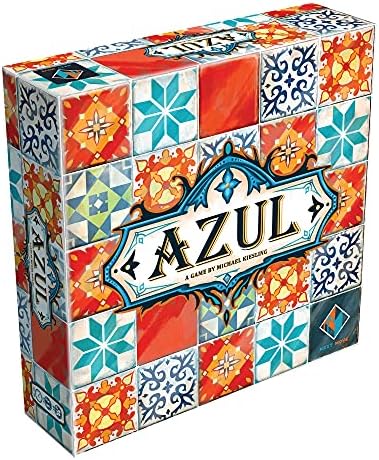
- AWARD-WINNING STRATEGY GAME: Azul is an award-winning board game that challenges players to create stunning tile mosaics…
- BEAUTIFUL TILE ARTWORK: Featuring beautifully crafted, colorful tiles, Azul immerses players in the art of mosaic design…
- EASY TO LEARN, CHALLENGING TO MASTER: With simple rules and deep strategic choices, Azul is accessible to new players ye…
6. Classic Monopoly (Updated Edition)
The iconic property-trading game receives modern upgrades while maintaining the classic gameplay that’s entertained families for generations. Players buy, sell, and trade properties to build real estate empires and bankrupt opponents through clever investments and ruthless rent collection.
What Makes It Stand Out: This updated edition addresses common complaints with a sleek banker’s tray for organized storage and larger metal tokens for easier handling. The fresh, modern aesthetic makes setup faster while preserving the strategic property trading that made Monopoly a household name. Perfect for families who want that traditional board game experience with contemporary improvements.
Pros:
- Updated components with storage tray and larger tokens improve user experience
- Classic gameplay instantly recognizable across generations
- Supports 2-6 players for larger family gatherings
- Multiple themed versions available for different interests
Cons:
- Notoriously long playtime (often 2+ hours)
- Player elimination means some sit out while others continue
- Luck-dependent dice rolls can override strategy
- Can create family arguments and hurt feelings

- Introducing Event cards for an exciting game
- Tap technology makes the game fast and fun
- Instant transactions and cashless gameplay
7. Connect Four Classic Grid
This strategic disc-dropping duel challenges two players to connect four discs in a row—horizontally, vertically, or diagonally—before their opponent. Simple premise, endless possibilities.
What Makes It Stand Out: Connect Four transforms basic tic-tac-toe into a three-dimensional battle of wits. The vertical grid adds spatial reasoning to pattern recognition, while the gravity mechanic creates unique strategic considerations. Games play lightning-fast at 10-15 minutes, perfect for tournament-style brackets or quick matches. The modern sleek design looks great on any game table.
Pros:
- Ultra-simple rules that kids age 6+ instantly understand
- Quick 10-15 minute games perfect for multiple rounds
- Three game variations included (classic, frenzy, pop-out)
- Durable construction lasts through countless matches
Cons:
- Limited to 2 players only
- Becomes somewhat predictable with experienced players
- No real randomness means better player almost always wins
- Can feel too simple for strategy game enthusiasts

- RULE THE GRID 4 THE WIN: With this classic Connect 4 game, featuring a sleek modern style, players go head-to-head as th…
- EXCITING STRATEGY GAME: Challenge a friend to rule the grid! Strategy drives the competition in this Connect 4 board gam…
- MODERN STYLE & COOL COLORS: The Connect 4 Classic Grid kids game takes the popular game one step further with a sleek st…
8. Clue (Reimagined Edition)
The classic murder mystery game receives a stunning makeover with richly reimagined characters, luxurious Tudor Mansion setting, and enhanced components. Six guests at Boddy Black’s mansion must solve his murder by determining who killed him, where, and with what weapon.
What Makes It Stand Out: This reimagined edition elevates the 75-year-old classic with gold-plated zinc weapon tokens, sculpted character movers, and beautifully illustrated cards that add atmosphere to every accusation. The new Clue cards system speeds up detective work and adds strategic depth to the deduction gameplay. Rich backstories for each suspect create immersive storytelling opportunities.
Pros:
- Premium components with textured gold-plated weapons
- Process-of-elimination deduction teaches logical thinking
- Clue cards add speed and strategy to classic gameplay
- Accommodates 2-6 players with engaging mystery every time
Cons:
- Dice-rolling movement adds luck element to deduction game
- Games can stall with analysis paralysis
- Limited player interaction beyond revealing clues
- Younger players (under 8) may struggle with deductive reasoning

- THE CLUE GAME, REIMAGINED: This Clue game combines classic Clue gameplay with richly reimagined takes on the original mu…
- SOLVE THE MYSTERY: Who killed Boddy Black? Collect clues and race to be the first to figure out who committed the murder…
- 6 SUSPECTS, 1 MURDER: Play as Miss Scarlett, Colonel Mustard, Mayor Green, Chef White, Solicitor Peacock, or Professor P…
9.UNO Card Game
The classic card-matching game challenges 2-10 players to shed their hand by matching colors or numbers to the discard pile. Special action cards—Skip, Reverse, Draw Two, and Wild—create chaos and dramatic reversals of fortune.
What Makes It Stand Out: UNO’s genius is its simplicity. Within 30 seconds, players of any age understand the core mechanic. Yet the action cards inject just enough strategy and chaos to keep everyone engaged. The compact deck travels anywhere, games play in 15 minutes, and customizable Wild cards let families create house rules. After 50+ years, it remains the perfect filler game.
Pros:
- Ultra-portable and plays anywhere with 2-10 players
- Fast 15-minute games encourage multiple rounds
- Easy enough for age 7+ while entertaining for adults
- Customizable Wild cards add personalization
Cons:
- Heavily luck-dependent with minimal strategy
- Can drag with large player counts
- Younger children may forget to call “UNO”
- Gets repetitive quickly without rule variations

- UNO card game provides classic play, where players match colors or numbers in a race to get rid of all their cards!
- Action Cards and Wild Cards add unexpected excitement and game-changing fun, like the Reverse Card that switches the dir…
- The deck includes 3 blank Wild Cards for house rules anyone can make up — erase and create new rules each game!
10. Scrabble Classic Word Game
The definitive word-forming board game challenges 2-4 players to create high-scoring words from letter tiles, strategically placing them on premium squares to maximize points. Vocabulary meets strategy in this timeless classic.
What Makes It Stand Out: Scrabble brilliantly combines language skills with strategic board control. Premium squares (double/triple word and letter) create tactical depth as players position words to block opponents while setting up future plays. Beyond entertainment, Scrabble actually builds vocabulary and spelling skills, making it an educational powerhouse. The satisfying click of tiles on the board adds tangible pleasure to intellectual challenge.
Pros:
- Educational benefits improve vocabulary and spelling
- Strategic depth appeals to word game enthusiasts
- Accommodates 2-4 players with minimal downtime
- Timeless gameplay that hasn’t aged in 75+ years
Cons:
- Vocabulary gaps can create frustrating skill mismatches
- Games often run 45-90 minutes
- Requires dictionary for word challenges
- Letter distribution luck can determine outcomes

- CLASSIC CROSSWORD GAME: Get family and friends together for a fun game night with the Scrabble board game! Put letters t…
- WOODEN TILES AND RACKS: This edition of the Scrabble game features 100 wooden letter tiles and wooden tile racks. The te…
- RACK UP THE POINTS: Scrabble letters are worth points, and premium squares on the gameboard multiply the score. Surprise…
Things to Consider Before Buying
Player Count and Scalability
The ideal game depends heavily on your typical group size. Games like Connect Four and Scrabble shine with 2 players but lose appeal with larger groups, while Codenames and UNO thrive with 6+ participants. Consider your Christmas Eve guest list: will it be an intimate gathering or a multi-generational celebration? Some games like Ticket to Ride and Catan perform well at specific player counts but require expansions to accommodate more players, adding to your investment.
Age Range and Complexity
Match the game’s complexity to your youngest participant’s age and attention span. Games with 8+ age recommendations generally work well for mixed-age groups, as children grasp core mechanics while adults appreciate strategic depth. However, games like Pandemic and Catan demand more cognitive effort and may frustrate very young children or elderly relatives unfamiliar with modern board games. Connect Four and UNO offer universal accessibility, while Codenames requires abstract thinking that some players find challenging.
Playtime and Game Length
Christmas Eve schedules vary wildly—some families have hours to play, others squeeze games between dinner and church services. Quick-playing options like UNO (15 minutes) and Connect Four (10 minutes) enable multiple rounds and tournament brackets. Mid-length games like Ticket to Ride and Azul (30-45 minutes) provide satisfying experiences without monopolizing the evening. Avoid long epics like traditional Monopoly unless your family specifically enjoys marathon gaming sessions, as games lasting 2+ hours can derail holiday schedules.
Competitive vs. Cooperative Dynamics
Family dynamics should inform your choice between competitive and cooperative games. Households with hyper-competitive members may appreciate head-to-head battles in Catan or Ticket to Ride, while families prone to arguments benefit from cooperative experiences like Pandemic where everyone wins or loses together. Consider generational skill gaps too—games where adults dominate through experience can discourage younger players, whereas luck-based games like UNO give everyone a fighting chance.
Replay Value and Long-Term Investment
Some games deliver hundreds of plays before feeling stale, while others peak after a dozen sessions. Games with modular boards (Catan, Ticket to Ride), random card combinations (Codenames), or variable strategies (Azul) offer high replay value. Others like Clue and Connect Four can become predictable once patterns emerge. If you’re investing in a single holiday game, prioritize titles with expansion ecosystems (Catan, Pandemic, Ticket to Ride) that extend gameplay for years. Budget-friendly options like UNO and Connect Four cost less upfront but may require supplementing with variety.